


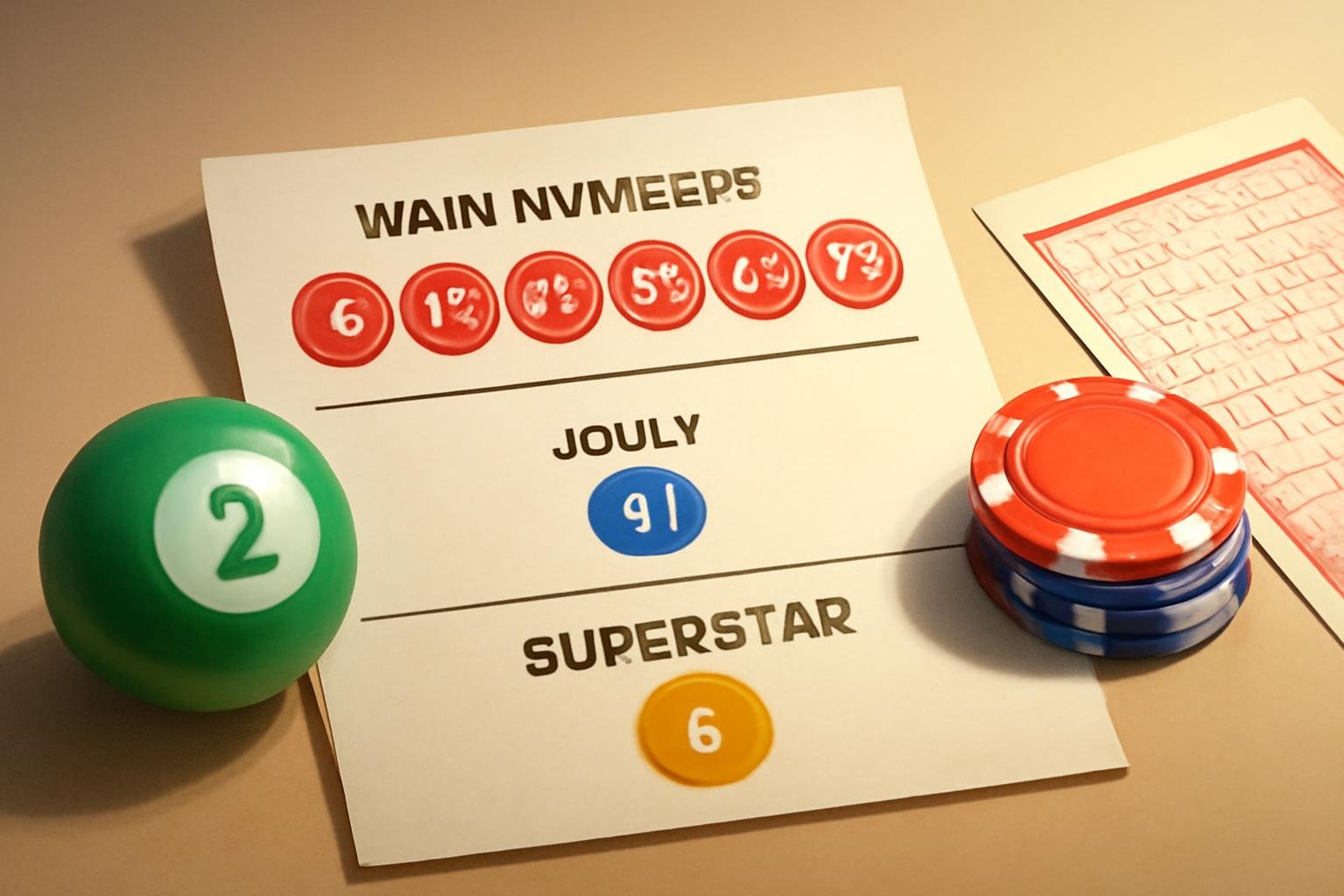
A SuperEnalotto results display can contain more information than an ordinary player-selected main line. The six main numbers, the Jolly and an optional SuperStar role need different explanations. A generator that puts every displayed value into one row can leave readers unsure which values they are actually selecting.
The basic main selection contains six different values from 1 to 90. A superenalotto number generator should identify that six-number set first. If it also explains Jolly or SuperStar information, those labels should remain separate so that a result component is not accidentally presented as an extra main-number choice.
The main set is six from 90
The main values form an unordered set. A sorted display helps checking, but rearranging the same six members does not create another main combination. All six values must be within the permitted field and different from one another. These are the first objective checks to make when reviewing a generator.
The large field also means that a line can look sparse or oddly clustered without being invalid. Do not substitute visual expectations for the actual range and count rules. A six-number preset from another lottery can produce plausible-looking values while still failing to describe the SuperEnalotto field correctly.
The Jolly belongs to the result
The Jolly is an additional drawn value used in a particular lower prize condition involving five main matches. It is not a seventh value added to a normal player-selected main line. A generator can illustrate a hypothetical result with a Jolly, but it should label that object as a result.
For a learning example, preserve the selected six separately, then show the six main result values and Jolly in another record. This makes it possible to practice the five-plus-Jolly condition without changing the original selection. The distinction is about the role of each value, rather than merely how many boxes appear on a screen.
SuperStar is a different concept
The optional SuperStar feature uses a separately identified value under its own participation conditions. It should not be confused with the Jolly merely because both can appear alongside main results. One is an optional selected component of an eligible entry; the other is a drawn result component used in the main game's category structure.
A separate-pool SuperStar label may coincide numerically with a main label. A tool should explain its role and range rather than applying a global uniqueness rule across every printed value. Whether the feature is actually included must be verified through the authorized accepted entry, not inferred from an illustrative extra box.
Keep three record types distinct
A main-number example records six selected values. A full accepted entry can also record applicable optional participation. A result record describes what was drawn, including relevant additional result information. These records overlap in subject matter but should not be treated as interchangeable objects.
This separation helps when exporting to plain text. Label the main set, any illustrated optional field and any hypothetical result explicitly. Do not rely on colour or position alone, since those cues may disappear when a selection is pasted into a note, printed or read through an accessibility tool.
Compare main combinations correctly
When checking several main examples, sort each set before comparing the values. Different display orders of the same six numbers remain the same main combination. If an exercise concerns an optional field as well, retain it separately and state whether the comparison is main-only or complete for that exercise.
A large multiple selection, where offered under current rules, also needs a clear description of the component main combinations it represents. It is not automatically equivalent to one ordinary line with spare values. The official accepted product determines its entry meaning and any associated cost.
Keep preferences separate from prediction
A tool can let readers include favourite values or avoid certain shapes. Those settings constrain its examples, but they do not establish that an individual retained main set is more likely than another valid main set in a fair draw. Historical frequency lists do not change that basic relationship.
The drawn Jolly also illustrates why uniqueness rules depend on the stage of the process. As additional information from the remaining main pool, it is not another copy of one of the six main winning values. A separately handled SuperStar has a different pool role. A page that treats every extra label as the same kind of bonus can therefore apply the wrong validation rule even when all its displayed values look plausible.
The useful standard for a SuperEnalotto generator is clarity about roles: six main values selected, a Jolly drawn as part of the result and an optional SuperStar handled separately under applicable conditions. Explaining those distinctions makes the output useful for learning and checking without presenting ordinary number generation as a prediction or an official entry process.

